
12 Leadership Lessons I Learned This Year (That Changed Everything)
Leadership lessons rarely show up when we schedule them.
They show up when we take risks.
When plans change.
When we try something new and aren’t sure if it will work.
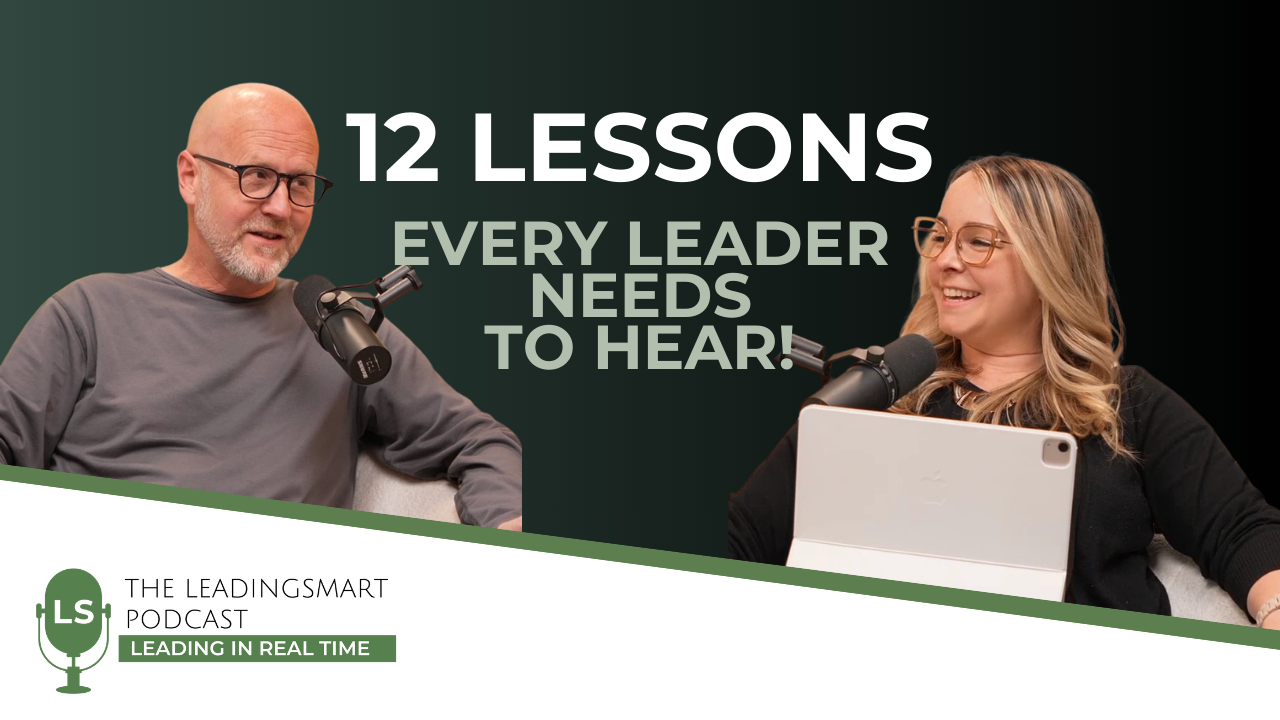
Recently, my friend and LeadingSmart consultant Holly Tate shared something that sparked a great conversation on the LeadingSmart Podcast.
Holly is about to celebrate one year of building The Ready Network, a network of coaches that helps leaders and teams get ready for growth. Over the past year, she’s been doing two things simultaneously: building her own company while continuing to help churches through LeadingSmart.
It’s been fun to watch.
And it also made me curious.
So on the podcast, I put her on the spot.
Holly had written down 12 lessons she’s learned over the past 12 months, and we walked through several of them together. What followed was a really honest conversation about leadership, growth, risk, and what it actually looks like to lead in real time.
Here are a few of the leadership insights that stood out.
1. Working With People You Trust Matters More Than the Work Itself
Most leaders focus on the what of their work.
But over time, you realize the who matters just as much, sometimes more.
Great work with the wrong people drains your energy.
But meaningful work with people you trust and respect creates a completely different experience. It builds momentum, creativity, and joy in the work.
Healthy leadership teams don’t just focus on results.
They cultivate trust.
2. Doing Things Scared Is Often the Fastest Way to Grow
One of Holly’s reflections from the past year was simple:
Doing things scared is the best way to learn.
Many leaders feel pressure to wait until they have certainty before acting.
But leadership rarely works that way.
Sometimes growth requires stepping forward without all the answers. Trying something new, launching an idea, or making a decision that feels uncomfortable.
The reality is that leaders rarely gain clarity by waiting.
They gain clarity by moving.
3. Managing Energy Is Just as Important as Managing Time
Most leadership advice focuses on time management.
But great leaders also learn to manage energy.
Two hours of work on something that drains you can feel exhausting.
Two hours working on something meaningful can energize you for days.
Understanding what gives you energy and what drains it is a critical leadership skill.
The healthiest leaders structure their calendars not just around tasks, but around how they show up at their best.
4. Gratitude Is a Leadership Superpower
Early in the year, Holly chose gratitude as her word for the year.
Just weeks later, her role at the company she worked for was eliminated.
That season of uncertainty forced her to lean into gratitude in ways she didn’t expect.
Leadership inevitably includes seasons that feel uncertain or uncomfortable. Gratitude shifts our perspective during those moments.
It keeps leaders grounded.
And it reminds us that even in difficult seasons, there is still something worth noticing and appreciating.
5. Clarity Creates Momentum
One of my favorite insights from our conversation was this:
Clarity creates momentum.
Many leadership teams stay stuck in what I would call discernment loops. They keep discussing, processing, and refining ideas, but never quite cross the line into clear decisions.
Meanwhile, the rest of the organization is waiting.
Teams can’t execute without direction.
Staff can’t prioritize without clarity.
When leaders communicate clear decisions and direction, momentum follows.
Without clarity, even the most talented teams stall.
6. AI Will Increase the Need for Human Leadership
Another interesting point from our conversation was about artificial intelligence.
AI is advancing quickly, and many leaders are still trying to understand what it means for their organizations.
But one thing seems increasingly clear:
Technology may generate ideas faster, but leaders still need people to help them discern what actually matters.
Coaches, mentors, and trusted advisors provide something AI can’t: context, accountability, and human wisdom.
As technology increases, the need for meaningful human leadership relationships may actually increase as well.
Leadership Lessons Often Come From Reflection
One of the reasons Holly’s list was so valuable is simple:
She took time to reflect.
Most leaders move from one challenge to the next without ever stopping to ask:
What did I learn from that season?
Reflection turns experience into wisdom.
And often, the best leadership insights come from simply slowing down long enough to notice them.
Listen to the Full Conversation
In this week’s episode of the LeadingSmart Podcast, Holly and I talk through several of these lessons and what they’ve looked like in real time over the past year.
If you lead at any level, this conversation will give you a practical perspective you can apply immediately, not just something interesting to think about.
You can listen to the episode here:
And if you lead a team, here’s a question worth considering this week:
What has the past year of leadership been trying to teach you?
You might be surprised by the answer.